Culture & creation / Essay 001
When everything can be made, what is worth making?
The next creative skill might be knowing what to leave out.
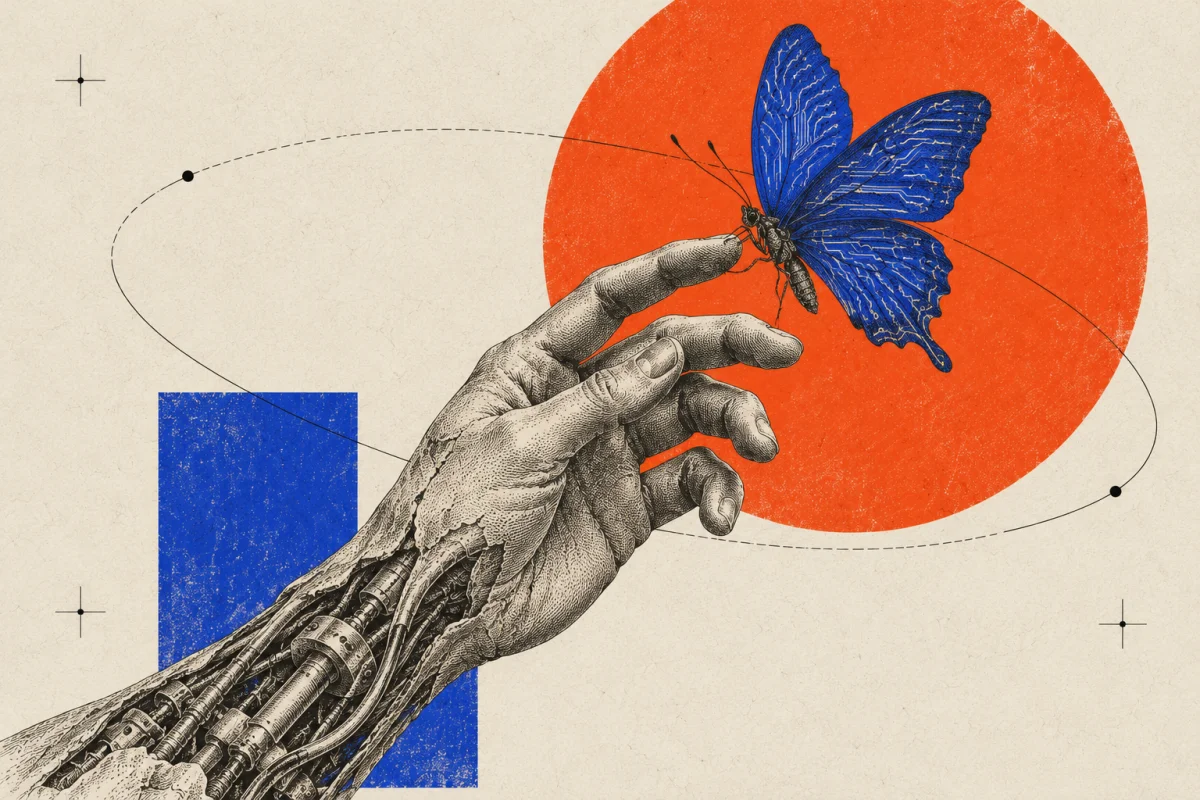
There is a particular pleasure in making something that didn't exist a moment ago. A sentence. A picture. A small piece of software that does one useful thing. For most of us, that pleasure used to come with quite a bit of friction.
You had to learn the tool. Find the material. Get past the disappointing first version. The distance between an idea and its expression could be enough to make the idea disappear.
Generative tools can shorten that distance. That's a gift. It is also a new kind of problem.
When you can ask for another version, then another, then fifty more, the question quietly changes. It stops being whether you can produce something and starts being whether you recognize a reason to stop.
Abundance doesn't remove the need for taste. It gives taste more work to do.
Taste is often treated as a mysterious possession. Some people have it. Some people don't. But it may be more useful to think of taste as a practice of attention: noticing what matters, developing a point of view, and being able to say why one choice serves an idea better than another.
A machine can help you explore possibilities. The work of deciding what the possibilities are for remains yours.
That is why the most interesting uses of these tools may look surprisingly deliberate. A small palette. A recurring visual language. A constraint that makes the work recognizable. An editor willing to remove the beautiful thing that doesn't belong.
The temptation is to demonstrate how much you can make. The opportunity is to become clearer about what you want to say.
Make a lot, if it helps you think. Keep very little, if that helps someone else see.
Stay curious. The rest can wait.
Get the dispatch →